

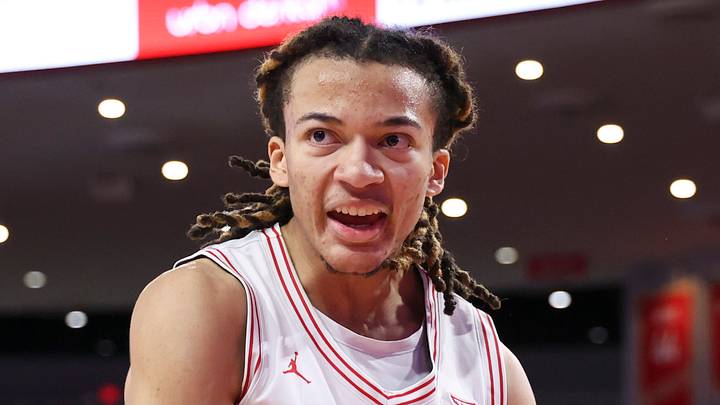
It does not look like the Atlanta Hawks will make a big-time splash move this offseason. They enter the 2026-27 NBA campaign focusing on internal development. Atlanta is relying on Jalen Johnson, Dyson Daniels, Nickeil Alexander-Walker, Onyeka Okongwu, and the rest of the young core to take big steps forward in a tough Eastern Conference.
The Hawks added three rookies to their talented core in the 2026 draft: Kingston Flemings, Zuby Ejiofor, and Henri Veesaar.
All three have the chance to impact the team now or in the future. However, Atlanta took Flemings with the No. 8 pick in a stacked draft class and expects him to become a franchise cornerstone. If he improves in two key areas, he can become exactly that.
Kingston Flemings' two swing skills to reach his star potential
Flemings enters the NBA with superb speed, athleticism, and playmaking skills. At 19 years old, few players have the patience in the pick-and-roll and the basketball IQ to make advanced passing reads, but he does. Flemings averaged 5.2 assists and just 1.8 turnovers at the University of Houston. He also dished out 6.8 dimes in Las Vegas and Salt Lake City this summer.
Flemings already displayed his playmaking expertise during summer league, but if he improves his three-point volume and rim finishing, he can take his game to the next level.
Flemings does not take enough threes yet
Flemings shot 38.7% from deep in college. That number looks good on the surface, but he only took 2.9 attempts per game. This low 3-point volume continued in the Summer League, as he averaged just 3.2 shots from beyond the arc at 30.8% efficiency.
He often hesitated when defenders gave him space because they were wary of him blowing by them. Atlanta's young guard must prove he is comfortable taking an open three when the defense gives him space.
Hawks head coach Quin Snyder consistently encourages his players to "let it fly" from deep. This philosophy puts Flemings in a great position to force NBA defenders to respect his three-point shot. Defenses would then have to worry about his ability to get to the rim and hurt them from beyond the arc, putting them in a difficult situation.
The rim pressure is all there, but the finishing has to improve
Nobody questions Flemings' ability to get inside the paint and make the right pass that leads to a bucket. However, questions arise about his efficiency at the rim and inside the restricted area.
According to Synergy, Flemings shot 55% at the rim and 53% on layups. These numbers are not disastrous, but they need to improve, especially when trying to finish through or around contact from shot blockers. Through four summer league games, he shot 50% from the restricted area and 25% from the rest of the paint.
It is only a short sample size, but Flemings shied away from contact when he drove inside this summer. He relied on floaters to score over centers after getting by his man, but they did not fall. Flemings must get stronger and learn to embrace contact to get easy points from the free-throw line as his career unfolds.
If Flemings improves his three-point shooting and rim finishing, he could become a lethal scoring threat who can also create easy open looks for his teammates.
 Add us as a preferred source on Google