

The biggest takeaway from the Hawks’ recent trade activity is how intentional it has been. Moving Trae Young to Washington was not just about resetting the roster, but about maintaining long term cap flexibility. By avoiding restrictive contracts and preserving financial breathing room, Atlanta kept future paths open instead of locking itself into one outcome.
That flexibility matters because it allows the front office to react, not panic, when opportunities arise.
For a team that has lived in the middle for years, that alone represents meaningful progress. The Hawks also did a strong job of quietly accumulating draft capital without sacrificing their core vision. In the Vit Krejci deal with Portland, Atlanta added multiple second round picks while moving a role player whose value had likely peaked.
They followed that up by collecting another second rounder in the Luke Kennard trade with the Lakers, again prioritizing future assets over short term optics. Second round picks are not glamorous, but they are useful currency for development, trades, and roster flexibility. Over time, those incremental gains give the Hawks more control over how and when they make their next move.
Smart Flexibility, Draft Capital, and Upside Are Finally Aligned
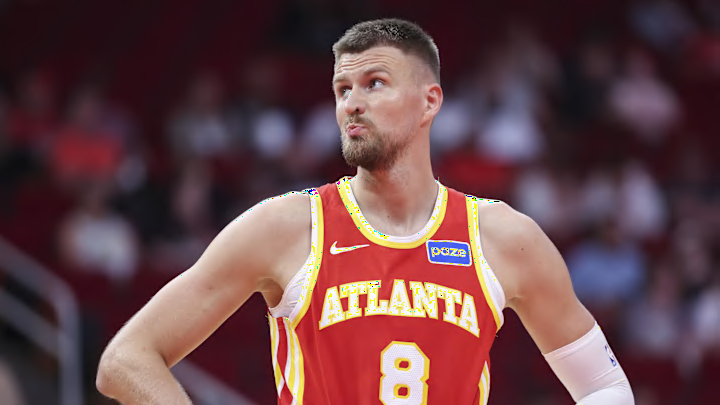
Perhaps the most important swing came in the Kristaps Porzingis trade with Golden State. Landing Jonathan Kuminga gave Atlanta a legitimate high upside talent who still fits a young timeline. Kuminga brings athleticism, defensive potential, and developmental runway that are difficult to acquire without draft luck or overpaying in free agency.
Instead of chasing aging veterans to patch holes, the Hawks invested in a player who can grow with the roster. That choice reflects a clearer understanding of where the franchise actually is, not where it wishes it were.
What ties all of these moves together is optionality. Atlanta now has cap flexibility, extra draft assets, and a young player with real upside to evaluate. That combination allows the front office to stay patient and avoid forcing a win now decision too early.
They can let the roster breathe, see who fits, and make a targeted move when the timing is right. For the first time in years, Atlanta is operating from a position of leverage rather than urgency. The Hawks’ recent trades may not dominate headlines, but they are laying a real foundation. Flexibility, draft capital, and upside are the pillars of sustainable team building in the modern NBA. Atlanta has finally aligned its process with its reality.
If executed correctly, these moves give the franchise a chance to escape the middle. And that alone makes this stretch one of the most important in recent Hawks history.
 Add us as a preferred source on Google