

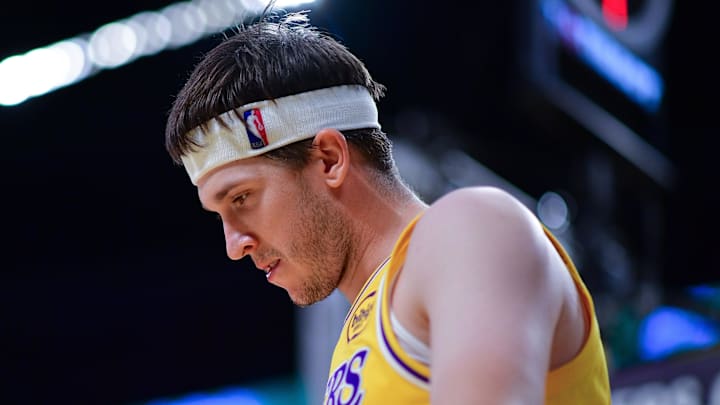
The Atlanta Hawks reportedly have interest in Austin Reaves, but the idea of pursuing the Lakers guard may not fully align with the vision GM Onsi Saleh recently laid out for the organization.
During Atlanta’s end-of-season press conference, Saleh emphasized that the Hawks are “not one player away” from title contention and stressed the importance of development, flexibility, and long-term growth.
That philosophy makes the rumored Reaves interest far more complicated than it initially appears. Especially considering the type of contract he could command this offseason.
According to Sam Amick of The Athletic, both the Atlanta Hawks and Utah Jazz are among the teams believed to have interest in Reaves. However, Atlanta would likely need to make additional roster moves to realistically create enough financial flexibility.
Austin Reaves postseason scoring vs OKC
— Basketball Performances (@NBAPerformances) May 14, 2026
• 25/4/7 on 51/39/82 splits last 3 games
• Playoff career-high 31 PTS on 76 TS% pic.twitter.com/6fblYTKP0x
That alone raises an important question about whether the Hawks should aggressively pursue a player who may eventually command close to $40 million annually. While Reaves is undoubtedly talented, that type of financial commitment carries significant long-term implications.
Austin Reaves would help Atlanta immediately
Reaves would absolutely address several weaknesses on Atlanta’s roster. The Hawks struggled with consistent backcourt production throughout stretches of the season, particularly during their playoff series against the New York Knicks.
Reaves provides secondary shot creation, perimeter scoring, and offensive versatility that this roster clearly needs. His ability to operate both on and off the ball would also fit naturally alongside Atlanta’s current core pieces.
This past season, Reaves averaged 23.3 points, 4.7 rebounds, and 5.5 assists while shooting 49% from the field and 36% from three-point range. Those numbers reflect the type of offensive production most teams would gladly invest in.
He has steadily developed into one of the more efficient offensive guards in basketball and consistently impacts winning. There is no debating the value he could provide offensively for Atlanta.
The financial reality may not match the Hawks' vision
The bigger issue revolves around whether paying Reaves near-max money aligns with the Hawks’ current timeline. Saleh’s comments made it very clear that Atlanta is prioritizing sustainable roster building rather than chasing quick fixes.
Committing massive financial resources to one player could limit the flexibility the front office appears determined to preserve. That becomes especially important for a team still needing upgrades across multiple positions.
Atlanta’s playoff loss to New York exposed problems beyond simply scoring in the backcourt. The Hawks also struggled defensively, particularly containing physicality and maintaining resistance at the point of attack.
Reaves, while productive offensively, is still viewed by many as a defensive liability in certain matchups. Paying premium money to a player who does not fully solve both sides of the floor may not be the smartest path forward for a developing contender.
None of this means the Hawks should completely avoid pursuing Reaves if the opportunity becomes realistic. Players with his offensive skillset do not become available often, and there is no question he would improve Atlanta immediately. But the Hawks must remain disciplined in how they approach roster construction moving forward.
If the organization truly believes contention will come through patience, development, and maintaining flexibility, then every major decision this offseason must reflect that philosophy — even when talented players become available.
 Add us as a preferred source on Google