

The Atlanta Hawks may have quietly revealed their biggest offseason objective. According to Jake Fischer of The Stein Line, the Hawks are comfortable remaining at No. 8 in the 2026 NBA Draft while also being willing to field offers for the No. 23 overall pick.
More than anything, it suggests that Atlanta is prioritizing immediate improvement over a long-term youth movement. The Hawks appear focused on building upon the momentum of a successful season rather than starting over with multiple rookies.
That approach should not come as much of a surprise. Atlanta is coming off its best season since the 2020-21 campaign after securing a top-six playoff seed in the Eastern Conference. The organization has spent the last year reshaping its roster, adding talent, accumulating flexibility, and creating a stronger foundation for the future.
Now, the next challenge becomes turning a playoff team into a legitimate contender.
Keeping the No. 8 pick allows Atlanta to still add a premium prospect capable of contributing both now and in the future. However, the willingness to move No. 23 paints a different picture. Rather than adding another developmental player, the Hawks may prefer using that selection as a tool to improve the current roster.
Atlanta’s most recent moves tell a similar story
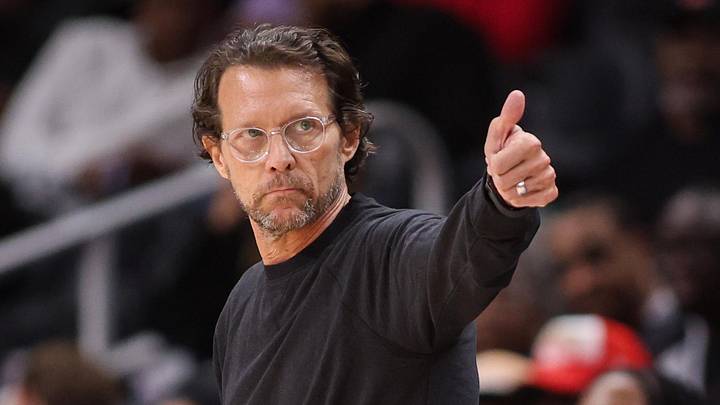
The draft strategy is not the only sign pointing toward a win-now approach. Earlier this offseason, the Hawks promoted and extended Onsi Saleh to president of basketball operations before signing Quin Snyder to a multi-year contract extension. Those moves reflected organizational confidence in the current leadership structure.
Teams that are uncertain about their direction typically do not commit long-term to both the front office and coaching staff simultaneously. Atlanta did exactly that. The organization appears convinced that Saleh and Snyder are the right duo to guide the franchise forward. Extending both leaders before a critical offseason signals confidence in the path already being built.
The Hawks also made a major statement earlier in the year when they acquired Jonathan Kuminga. That move represented one of the first clear signs that they intended to accelerate their timeline rather than remain patient indefinitely. Kuminga is the type of player acquired by teams trying to compete sooner rather than later.
Several very important decisions still await
Of course, Atlanta has significant questions to answer this summer. One of the biggest revolves around Kuminga’s future and whether the Hawks will commit to him with a new contract. Another involves Zaccharie Risacher, whose disappointing sophomore season has generated uncertainty regarding his long-term role within the organization.
There have also been rumors connecting Atlanta to players such as Jaylen Brown and Austin Reaves. Whether either player becomes a realistic target remains unclear. More importantly, the rumors themselves are not the story. The bigger takeaway is that Atlanta continues appearing in conversations involving established talent rather than rebuilding pieces.
That distinction matters. The Hawks are no longer operating like a franchise collecting assets for a distant future. They are beginning to behave like a team searching for ways to maximize the current roster while maintaining flexibility. Trading the No. 23 pick could be one way of accomplishing that goal.
The Hawks’ latest draft position says less about specific players and more about organizational philosophy. Atlanta seems comfortable selecting one impact prospect at No. 8 while remaining open to using additional assets to strengthen the roster elsewhere.
For a franchise fresh off its first top-six playoff finish in years, that mindset should excite fans. The Hawks are not acting like a team content with simply making the playoffs. They are acting like a team trying to take the next step.
 Add us as a preferred source on Google