

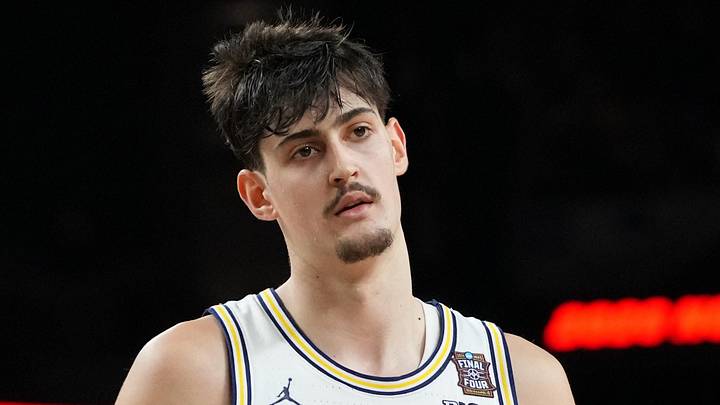
The Atlanta Hawks could find themselves at the center of an intriguing draft-night discussion if the Oklahoma City Thunder pursue a move into the top ten. Oklahoma City reportedly has interest in acquiring a more immediate-impact player and could potentially offer picks No. 12 and No. 17 in exchange for Atlanta’s No. 8 selection.
While that may sound appealing on paper, the Hawks should be extremely careful before moving down the board. Atlanta’s current timeline suggests quality may be more valuable than quantity.
Unlike rebuilding teams, the Hawks are not searching for multiple developmental projects. Atlanta just returned to the playoffs as a top-six seed and is actively trying to move closer toward legitimate contention.
That reality changes how the front office should approach the draft. The organization is less concerned with accumulating young players and more focused on identifying talent capable of helping sooner rather than later.
The difference between selecting eighth and selecting twelfth can be significant in a strong draft class. Atlanta currently sits in a position where several high-end prospects could realistically be available.
Moving down four spots introduces uncertainty into the equation. If the Hawks already have specific targets in mind, sacrificing that opportunity simply to gain another first-round pick may not be worth the risk.
Atlanta’s timeline makes this more complicated
The biggest factor working against a trade-down scenario is where the Hawks currently stand as a franchise. GM Onsi Saleh has repeatedly emphasized building a sustainable contender while maintaining flexibility. That approach does not necessarily align with adding multiple rookies to a roster already attempting to compete for playoff positioning.
Development remains important, but Atlanta’s needs are becoming more immediate. The Hawks still need additional frontcourt size, offensive creation, and overall depth.
Finding one player capable of addressing those concerns may be more valuable than drafting two prospects with uncertain timelines. Sometimes the best move is simply staying put and selecting the highest-rated player available.
That does not mean a trade-down should be completely dismissed. If Atlanta believes a targeted prospect will still be available at No. 12, the conversation changes considerably. Adding another mid-first-round selection could create additional flexibility while still allowing the Hawks to acquire a player they value highly. Everything depends on how the draft board develops.
The No. 23 pick adds another layer
Another important piece of this discussion is Atlanta’s ownership of the No. 23 overall pick. The Hawks already possess a second first-round selection that could be used in a variety of ways. Rather than adding another rookie, Atlanta may ultimately prefer packaging that pick in a separate trade designed to improve the roster immediately.
That possibility is one reason why accepting Oklahoma City’s proposal may not be as attractive as it initially appears. If the Hawks already have additional draft capital available, there may be less urgency to acquire another first-round selection. The front office could instead use its existing assets to pursue veteran help or move around the board in different ways.
Ultimately, this feels like a situation worth monitoring rather than expecting. Oklahoma City has legitimate reasons to pursue a top-ten pick, and Atlanta certainly has reasons to listen. However, the Hawks appear far more focused on maximizing impact than increasing volume.
Unless there is confidence that a preferred prospect remains available at No. 12, moving down may create more questions than answers. For a team trying to win now while building for the future, staying at No. 8 could still be the smartest path forward.
 Add us as a preferred source on Google