

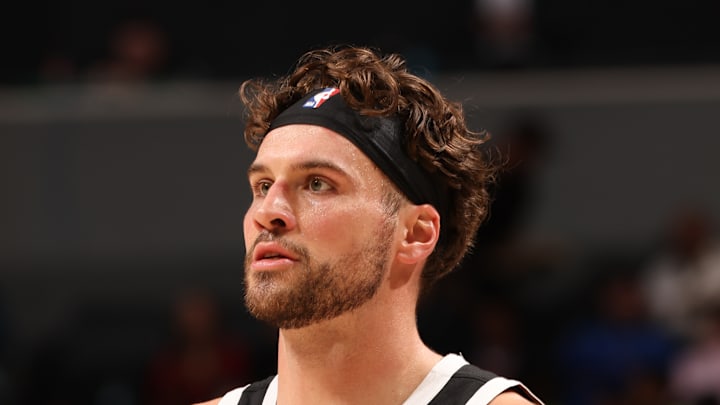
The NBA world was shocked recently when the Atlanta Hawks shipped off their longest-tenured player, Trae Young, for what seemed like pennies on the dollar.
Corey Kispert and an aging CJ McCollum for Trae Young. No picks, promising youngsters, just two players for the four-time All-Star.
The immediate reaction is that Atlanta lost this trade due to the lack of assets that they received in return, but analyzing the current roster shows that Atlanta might actually be one step ahead of the rest of the league.
Corey Kispert gives Atlanta an even greater shooting edge
CJ McCollum, of course, brings a secure veteran presence that was needed within this organization, but it's Corey Kispert that actually gives the Hawks an advantage that no other team possesses.
So far this season, Corey Kispert is shooting lights out from the three, averaging 39.5% on the season, with a career average of 38.3% beyond the arc. Now this gets combined with the two sharpshooters that Atlanta already has in their rotation, Luke Kennard and Vit Krejci, who shoot 45.8% and 46.5% from three, respectively.
Atlanta has already solidified themselves as one of the more efficient shooting teams in league, shooting 37.3% on average as a team, and Kispert only bolsters this aspect of the offense that much more.
Slot Kispert in to an Atlanta system that already puts such an emphasis on ball movement and floor spacing, and Corey Kispert's game will translate seamlessly. Atlanta now boasts a three-headed monster of shooters with any given rotation, who all have the capability of stretching the floor to even greater lengths.
This new trio now gives the Hawks something that not many other teams can match: three sharpshooters, who all specialize in different aspects.
Luke Kennard has been one of the league's purest shooters ever since he entered the league back in 2017, and Vit Krejci has emerged as a dependable threat on the perimeter.
Now with Corey Kispert's expertise in misdirection and catch-and-shoot ability, and this Hawks team now has the ability to suffocate teams from beyond the arc, which would inadvertently open up their offense in the paint as well.
When Trae Young commanded the offense, defenses were able to adjust easier knowing Young's strengths and weaknesses. When team's can put their best defender on an opponents' sole playmaker, rotations have been a lot easier. Now, with Young out of the equation, defenses now have multiple avenues on the perimeter that they must worry about, which will inevitably create open looks in the paint for the big men.
In a league dominated by efficiency as of recent, the Atlanta Hawks may just be getting ahead of the curve. Sure, it's sad to see the Trae Young-era in the rearview, but what's emerging is a more balanced, centered approach to the Quin Snyder offense, something that Trae Young's skill set was never able to fully adjust to.
 Add us as a preferred source on Google