

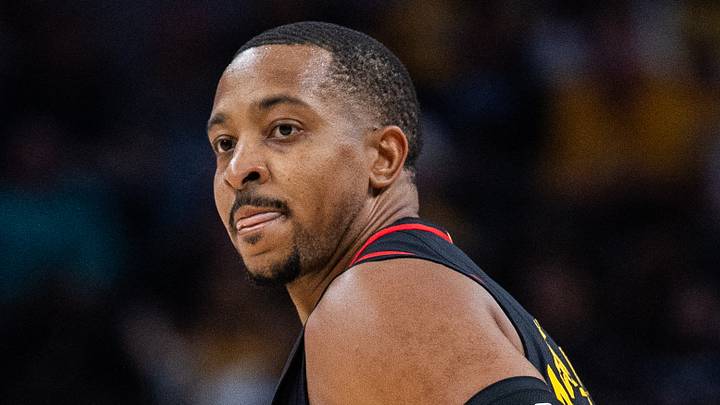
The Atlanta Hawks concluded their three-game road trip with a 2-1 record after defeating the Washington Wizards 120-105. While Kingston Flemings making his first NBA start was an encouraging development, CJ McCollum's willingness to embrace a different role deserves equal recognition.
Rather than starting alongside Atlanta's established veterans, Flemings replaced McCollum in the opening lineup. The decision highlighted something increasingly valuable for the Hawks: a veteran willing to prioritize a rookie's development and the team's success over his starting role.
McCollum is setting an example beyond basketball
McCollum is entering his 14th NBA season and has already established himself as a dependable scorer and respected veteran. At this stage of his career, he doesn't necessarily need to prove his value through a starting position.
Instead, McCollum is demonstrating how leadership can influence a team's culture. Accepting a bench role while continuing to support Flemings sends an important message about putting the organization's success ahead of individual recognition.
Following Wednesday's victory, Quin Snyder emphasized McCollum's professionalism and importance to the team. Snyder also made it clear that nobody has been more supportive of Flemings than the veteran guard.
Both the Hawks and Wizards TV broadcasts have now reported that CJ McCollum went to Quin Snyder and instigated the starting lineup change that had him coming off the bench tonight.
— Brad Rowland (@BTRowland) November 5, 2026
That support extends beyond games. Flemings has spoken highly of McCollum's mentorship, explaining how the veteran regularly provides guidance during practices and timeouts.
For a young point guard adjusting to NBA competition, having someone with McCollum's experience invested in his development can be invaluable.
Flemings is benefiting from veteran guidance
Flemings rewarded Atlanta's confidence with a productive performance against Washington. The rookie finished with 14 points, three rebounds and four assists while connecting on both of his three-point attempts.
His growing confidence was evident as he pushed the pace, attacked scoring opportunities and helped facilitate Atlanta's offense. Those contributions provided another encouraging indication that his development is progressing.
However, his performance shouldn't overshadow the significance of McCollum's role in that process. Rather than viewing Flemings as competition for minutes, McCollum appears committed to helping the rookie become the player Atlanta believes he can eventually be.
That's particularly important for a Hawks organization balancing immediate expectations with long-term development. Having established veterans embrace younger teammates can make that transition considerably smoother.
There's currently no indication Flemings will permanently remain Atlanta's starting point guard. Snyder could continue adjusting his rotation depending on matchups, health and individual performances.
Regardless of what happens, McCollum deserves recognition for the example he's setting. His willingness to support Flemings demonstrates that leadership isn't always measured by scoring averages, minutes or starting assignments.
Sometimes the greatest contribution comes from helping another player succeed.
And McCollum is showing exactly why that matters for Atlanta's future.
 Add us as a preferred source on Google