

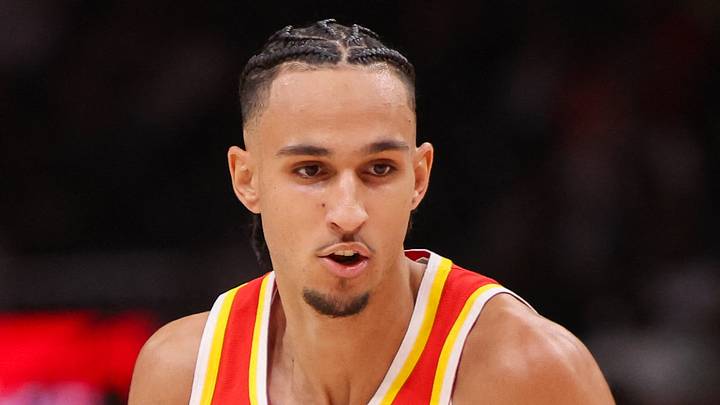
Zaccharie Risacher - still just 21 years old entering his third NBA season - has plenty of untapped potential. In order to unlock it, though, he was always going to have to part ways with the franchise that selected him first-overall.
It's not really a knock on the Hawks, or Risacher himself, honestly. The two parties were clearly heading in different directions once the back-half of last season hit.
Risacher was an untraditional top pick, and once the new front office regime was fully accustomed, and the face of the previous era had been shipped to Washington, the writing was simply on the wall for the young forward's immediate role.
Shifting eras, Atlanta realized they didn't have much time to waste
Making a midseason move as drastic as trading Trae Young a month before the deadline can often backfire. At least in the first few months that follow.
The Hawks, however, picked up right where they left off - eventually exceeding it.
It came at a cost, though. Risacher was no longer part of the nightly rotation, just two years removed from being selected with the first-overall pick. Players were trying to win. So was the entire coaching staff. If there was ever a time to establish a culture, it was then. No later.
Risacher, as promising of a young player as he was, still had plenty of room to grow, making his outlook a bit murky.
At Mavericks Media Day, he acknowledged that, noting he was "part of a team that was competing for a playoff spot," and there was "definitely a lot of pressure."
The best thing an organization can do to instill confidence in their fans, especially in a controversial time, is win.
They felt having Risacher in the nightly rotation, understandably going through the ups and downs of being a project player, didn't give them their best shot at that.
A fresh start was undoubtedly the best move for both sides
Sure, if the 21-year-old finds a new groove in Dallas, Hawks fans will have every right to feel a way.
Being the lead decision-maker in a front office is no small task, and it will inevitably present impossible choices - such as deciding whether or not to deal the top pick two years later.
Atlanta received a world-class defensive player in exchange for him, aligning much better with their current goals. Dallas will let Risacher develop. It's a win-win.
 Add us as a preferred source on Google