

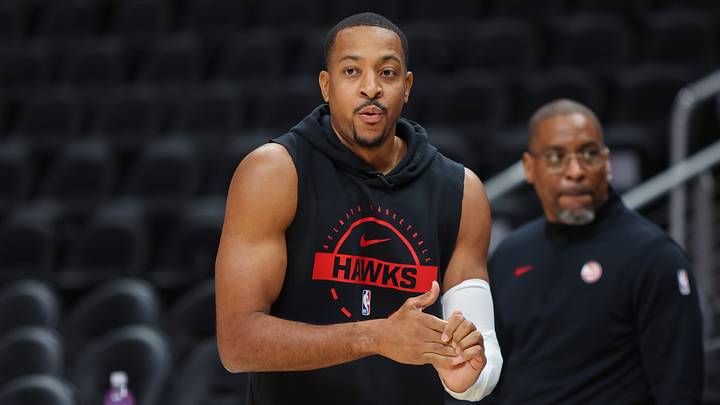
The Atlanta Hawks have reached an uncomfortable point in their season. Injuries are no longer simply testing Quin Snyder's rotations; they could begin influencing how President of Basketball Operations Onsi Saleh approaches the trade market.
CJ McCollum will be re-evaluated in approximately four weeks after suffering a left calf strain, while Asa Newell faces a roughly four-month recovery following surgery on his left big toe. Kingston Flemings and Jock Landale also remain sidelined, leaving Atlanta particularly thin at guard and center.
The timing couldn't be much worse. With Oklahoma City, Detroit, Boston and New York among the upcoming opponents, the Hawks may need to consider whether their existing depth can survive another stretch of absences.
Injuries are changing the equation for Atlanta
McCollum's absence removes more than a veteran scorer. His ability to organize possessions and steady younger teammates becomes especially valuable when Atlanta is facing disciplined defenses and trying to limit turnovers.
Flemings participated in practice before Wednesday's matchup against the Thunder, an encouraging step in his recovery from a lumbar strain. However, he remains listed out for that game, meaning Atlanta cannot simply assume help is arriving immediately.
The frontcourt presents another concern. Newell's extended absence further reduces depth behind Onyeka Okongwu, while Landale's hip issue and Mouhamed Gueye's recovery leave Snyder with fewer dependable options for size and rebounding.
This is where the situation becomes more complicated than asking available players to step up. Playing heavier minutes can address one game, but repeatedly stretching the same rotation risks exposing weaknesses opponents will eventually target.
Onsi Saleh may need to rethink his trade timeline
Atlanta should not confuse an injury crisis with a reason to sacrifice valuable assets. McCollum is expected to be reevaluated, Flemings has returned to practice, and short-term struggles do not automatically justify an expensive acquisition.
Still, Saleh cannot ignore the possibility that the roster's needs could change before the February trade deadline. If recovery timelines extend or additional players go down, exploring affordable backcourt support or frontcourt depth would become increasingly reasonable.
The distinction matters. A smaller move for a reliable rotation player could stabilize the Hawks without undermining the financial flexibility Saleh has worked to preserve for a more consequential opportunity.
Waiting also carries a cost. Atlanta has playoff ambitions, and dropping winnable games while navigating a difficult schedule could place unnecessary pressure on the team later in the season.
For now, the sensible approach is to evaluate how Snyder's available players respond and monitor the injured group closely. But Saleh should be prepared to act if the absences become a lasting obstacle rather than a temporary inconvenience.
The Hawks don't need a blockbuster simply because their injury report is crowded. They may, however, need to move their trade timetable forward if that crowded report starts shaping their season.
 Add us as a preferred source on Google