

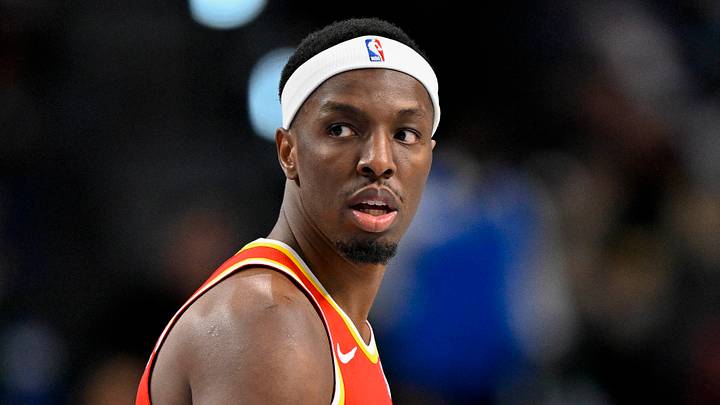
The Atlanta Hawks have stumbled to a 2-3 record after losing three consecutive games, raising questions about how quickly their revamped roster can find consistency. With several offseason additions still adjusting to Quin Snyder's system, growing pains were always a possibility.
However, one player Atlanta needs more from is Onyeka Okongwu. As the longest-tenured member of the roster, his ability to contribute consistently on both ends will be important if the Hawks hope to overcome their early struggles.
Okongwu's shooting could unlock Hawks' offense
One of Atlanta's biggest offensive advantages last season was Okongwu's improved perimeter shooting. He connected on 37.6% of his three-point attempts while averaging 5.2 attempts per game, providing valuable spacing from the center position.
That production hasn't carried over through the opening five games. Okongwu is averaging 9.6 points while shooting just 20% from beyond the arc on four attempts per contest.
Those numbers are concerning because Atlanta's five-out offense depends heavily on having players who can stretch opposing defenses. When Okongwu struggles from the perimeter, opponents can become more comfortable collapsing into the paint and challenging the Hawks to beat them from outside.
That creates additional difficulties for Jalen Johnson, whose ability to attack the basket and create opportunities for teammates remains essential to Atlanta's offense.
Of course, shooting percentages can fluctuate significantly over a small sample size. However, the Hawks need Okongwu to rediscover the confidence and consistency that made him such an important offensive contributor last season.
Hawks need Okongwu to become a more dependable interior presence
Atlanta's concerns aren't limited to the offensive end. The Hawks entered the season expecting to establish one of the league's strongest defensive identities, but their inability to consistently contain opponents has become an early issue.
Okongwu plays an important role in that responsibility, particularly when defending the paint and securing rebounds. Through five games, he's averaging 5.6 rebounds, leaving room for improvement from Atlanta's starting center.
His five personal fouls against Miami also highlighted the importance of maintaining defensive discipline. Okongwu must avoid unnecessary fouls that could limit his aggressiveness or force Snyder to adjust the rotation.
That doesn't mean Atlanta's defensive struggles fall entirely on him. Perimeter containment, communication and team rebounding remain collective responsibilities that require improvement.
Still, Okongwu's presence becomes particularly valuable when those responsibilities are executed correctly. His mobility allows Atlanta to defend different actions, while his rebounding and interior defense help complete possessions.
The Hawks aren't expecting Okongwu to suddenly become their leading scorer or carry the defense by himself. They simply need him to consistently provide the production he's already demonstrated he's capable of delivering.
Atlanta has enough talent to overcome its slow start, but maximizing that potential requires dependable contributions from its established players.
And Okongwu remains one of the most important pieces in making that happen.
 Add us as a preferred source on Google