

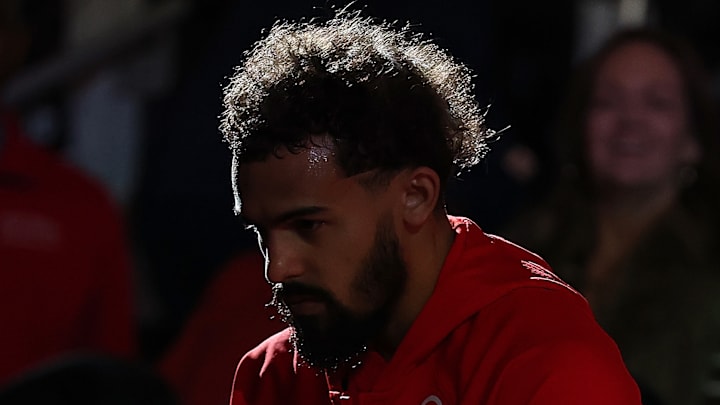
In 2026, the NBA simply does not have room for one-dimensional offensive stars like Trae Young and Ja Morant. The two point guards are both fantastic players who have made All-NBA teams, dragged forgettable teams to remarkable success, and earned some level of glory in this league. It’s not their fault that no teams want them – it’s the league’s.
Young and Morant are the last two titans of a dying breed that fans have learned to love. When Allen Iverson won the league MVP in 2001, he was the first player under 6’5 to do so since Bob Cousy in 1957. After decades defined by bully ball and physicality, Iverson became the best player in basketball through breathtaking ball-handling and outside shooting.
This was the dawn of the scoring point guard. After nearly 50 years of evolution, the league finally could accommodate a dominant scorer at the one position. From 2001 to 2017, offense-first point guards under 6’3 would win six more MVPs (41.2% of seasons): Steve Nash (x2), Derrick Rose, Steph Curry (x2), and Russel Westbrook.
In 2018, the Atlanta Hawks were well aware of the direction the league was shifting. The last four MVP awards went to Curry, Westbrook, and James Harden – another ball-dominant “point.” They decided to get ahead of the curve by trading the proven commodity of Luka Doncic for the high-upside swing in Trae Young.
The league shifted once again during Young’s tenure, leaving him stranded
What Atlanta, and every other team, did not anticipate was the sheer talent that would flood the league. In Iverson’s age, the benches were filled with players with questionable basketball ability or fatal athletic flaws. Today, nearly every player in the league can score 20 points on the right day if given the right opportunity.
NBA players are expected to be able to do everything at this point – score, pass, defend, rebound. When every player on the floor can get a bucket, suddenly the value of a volume shooter with questionable defense is diminished.
Young was caught in this dilemma. Had he been born ten years earlier, perhaps he could’ve rivaled Chris Paul, Curry, and Westbrook in an era conducive to point guard success. But his defensive limitations are simply too great in the modern NBA, despite the impact he can bring to an offense.
The Hawks were ridiculed for the pitiful return they got for Young. In a vacuum, these critics are right; Young is the second-best (perhaps even the best) player in franchise history, to not get a single pick for him during his prime is heartbreaking. But there was nothing Atlanta could do. The league had moved on.
Sam Amick of The Athletic asked a league scout about the Ja Morant and LaMelo Ball trade markets, given the context of Young’s deal. The scout replied, “Ja, Trae and LaMelo don’t have that much value because the game has changed around them.” Perhaps one day the one-dimensional point guard will return, but for today, Young is a dinosaur in a league evolving as quickly as ever.
 Add us as a preferred source on Google