

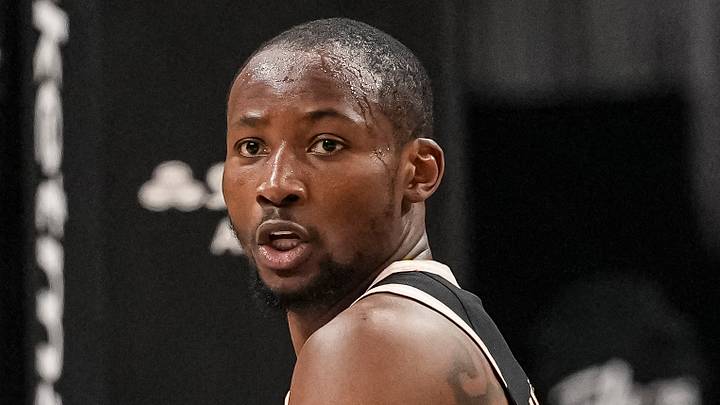
Jonathan Kuminga’s agent, Aaron Turner, recently joined Kevin O’Connor on The Kevin O'Connor Show to discuss his client’s tenure with the Atlanta Hawks. Turner understandably spent time highlighting Kuminga’s impact after arriving in Atlanta, including pointing toward his impressive on-off net rating during both the regular season and playoffs.
Turner even described Kuminga as Atlanta’s "best player" from that statistical perspective, which will naturally generate debate among Hawks fans. But perhaps the more interesting takeaway from the conversation wasn’t where Kuminga ranked among his former teammates — it was what Turner’s comments revealed about whether remaining in Atlanta actually made sense.
Kuminga eventually signed a two-year, $13 million contract with the Minnesota Timberwolves after a lengthy wait to determine his next destination. Although Atlanta reportedly maintained interest in bringing him back on a team-friendly contract, Turner’s comments help illustrate why the two sides ultimately moving in different directions may have been inevitable.
Atlanta was already committed to its young core
Kuminga undeniably provided the Hawks with a spark after arriving at the trade deadline. His athleticism, scoring ability and versatility added another dimension to Atlanta’s rotation, and his contributions became particularly important during the Hawks’ playoff series against the New York Knicks.
However, performing well and having a clear long-term role are two different things. Atlanta had already established Jalen Johnson as its franchise centerpiece while also making a significant commitment to Dyson Daniels, leaving Kuminga competing for opportunities within a roster that was increasingly being constructed around other players.
Aaron Turner on Kuminga’s role with the Hawks: “He was their best player” pic.twitter.com/XWcOGWzI9l
— dre (@OnBallSteph) August 31, 2026
That became even more apparent when Atlanta acquired Lu Dort and Aaron Wiggins during the offseason. Both additions strengthened an already crowded wing rotation, making it increasingly difficult to envision Kuminga receiving the expanded role that could help him maximize his development and increase his value.
From Kuminga’s perspective, accepting a smaller role on a team-friendly contract would have carried significant risk. At this stage of his career, consistent minutes and opportunities to showcase the full range of his offensive abilities could be more valuable than simply remaining with a team where he had already experienced success.
That is where Turner’s defense of his client becomes particularly revealing. If Kuminga's camp genuinely believed his production warranted a larger opportunity, Atlanta was becoming an increasingly difficult place to provide it.
Hawks made the right decision for their long-term vision
The same reasoning works from Atlanta’s perspective. President of Basketball Operations Onsi Saleh has spent the offseason reshaping the roster while maintaining the flexibility necessary to make additional moves, and forcing Kuminga into an increasingly crowded rotation would have created another issue for Quin Snyder to solve.
The Hawks already know Johnson will command significant offensive responsibility. Daniels remains another important piece of the franchise’s future, while Dort and Wiggins provide Snyder with additional options that better define the identity Atlanta appears to be building around its centerpiece.
Keeping Kuminga simply because he played well would not necessarily have been the best roster-building decision. Successful teams need players whose roles complement one another, and eventually there reaches a point where accumulating talent without having enough minutes or touches to distribute can become counterproductive.
That doesn't make Kuminga's Hawks tenure a failure. His production demonstrated that he could help Atlanta win, and his performances against New York provided glimpses of the player he could become with the right opportunity.
Minnesota can now provide Kuminga with a fresh environment where he can attempt to expand his game and increase his value. Atlanta, meanwhile, can move forward without having to determine how another talented wing fits into a rotation that was already becoming increasingly difficult to manage.
Turner was understandably attempting to emphasize how valuable his client had been to the Hawks. Ironically, his broader point about Kuminga’s production and need for opportunity may also explain why separating was the logical outcome.
Sometimes moving on doesn't require either side to be wrong. Kuminga deserved an opportunity to pursue a larger role, while the Hawks needed to prioritize the players and flexibility that better aligned with their long-term vision — and Turner may have inadvertently explained why Atlanta ultimately had to let him go.
 Add us as a preferred source on Google